- Satyam Kapoor
- 0 Comments
Introduction
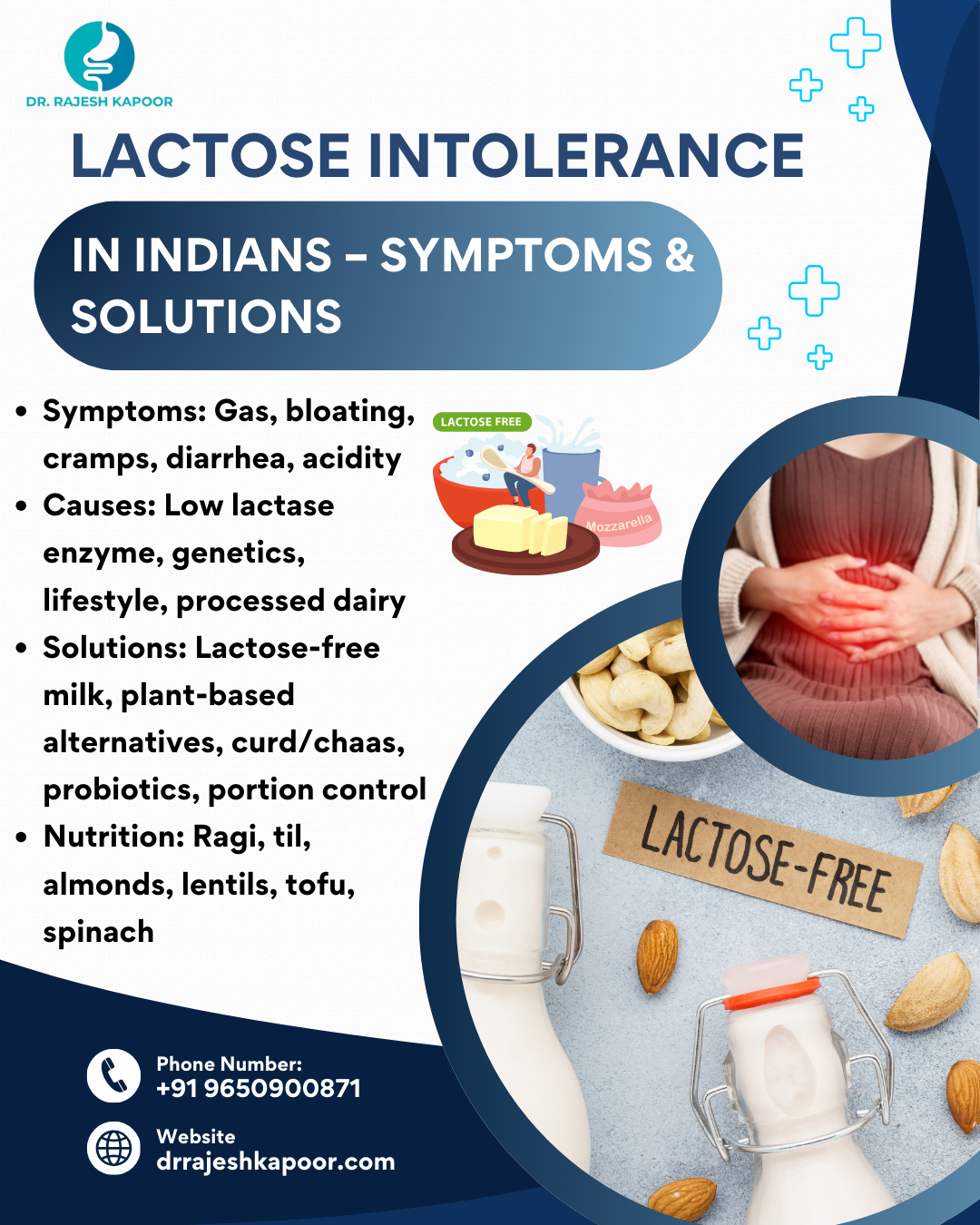
Milk and dairy products hold a special place in Indian culture—from a glass of haldi doodh at bedtime to curd rice in South India and lassi in Punjab. Dairy is not only a dietary staple but also linked to traditions, Ayurveda, and daily meals. Yet, for many Indians, consuming milk, paneer, or ice cream leads to bloating, gas, or stomach cramps. This condition, known as lactose intolerance, is far more common than most people realize.
In this blog, we’ll explore what lactose intolerance is, why it is so prevalent in India, common symptoms, and practical ways to manage it without giving up on health.
What is Lactose Intolerance?
Lactose intolerance occurs when the body is unable to fully digest lactose—the natural sugar found in milk and dairy. This happens due to low levels of lactase enzyme in the small intestine, which is needed to break down lactose into simpler sugars for absorption.
Instead of being digested, lactose ferments in the gut, leading to gas, bloating, acidity, diarrhea, or stomach pain.
Why Indians Are More Prone to Lactose Intolerance
- Genetic Factors
Globally, over 65% of adults lose the ability to digest lactose after childhood. Studies show that in India, especially in the eastern and southern states, a large percentage of adults are lactose intolerant due to genetic predisposition. - Dietary Habits
While North India consumes more milk, ghee, paneer, and curd daily, people from other regions rely less on dairy. As a result, many develop reduced lactase activity since the body adapts to lower dairy intake. - Ayurvedic Perspective
According to Ayurveda, dairy is considered “heavy” and can aggravate digestion if consumed in excess or at the wrong time (e.g., milk with salty food). This explains why many people feel discomfort after dairy-rich meals. - Urban Lifestyle & Processed Dairy
Today’s packaged milk, flavored yogurts, and cheese spreads often contain additives that may worsen digestive issues. For lactose-intolerant individuals, such products increase bloating and discomfort.
Symptoms of Lactose Intolerance
- Bloating and stomach fullness
- Excessive gas
- Abdominal cramps
- Diarrhea after consuming milk or dairy
- Nausea or acidity
- Fatigue after heavy dairy meals
Symptoms usually appear 30 minutes to 2 hours after eating dairy.
How to Manage Lactose Intolerance in India
1. Switch to Lactose-Free Alternatives
- Lactose-free milk is now widely available in Indian supermarkets.
- Plant-based options like soy milk, almond milk, oat milk, and coconut milk are becoming popular.
2. Choose Fermented Dairy
Curd (dahi), buttermilk (chaas), and ghee are often easier to digest since the lactose content is much lower. Many Indians with mild intolerance can tolerate these.
3. Mindful Portion Control
Instead of eliminating dairy completely, consume small quantities. For example, a spoon of curd with meals may not trigger symptoms compared to a large glass of milk.
4. Use Lactase Supplements
Lactase enzyme tablets or drops are available, which help digest lactose when taken before dairy-rich meals.
5. Combine Smartly
Avoid pairing milk with heavy or spicy foods. Have dairy with simple meals to reduce the digestive load.
6. Strengthen Gut Health
Include probiotics like homemade curd, kefir, idli, dosa batter, and fermented pickles to improve digestion and gut bacteria balance.
7. Consult a Doctor if Severe
If symptoms are frequent and severe, visit a gastroenterologist. Sometimes, what looks like lactose intolerance may actually be IBS, celiac disease, or dairy allergy, which need proper diagnosis.
Healthier Calcium & Protein Sources for Indians
Since dairy is a major source of calcium and protein, people with lactose intolerance must include:
- Calcium-rich foods: Ragi, sesame seeds (til), almonds, spinach, broccoli.
- Protein-rich foods: Lentils, chickpeas, soybeans, tofu, eggs, and fish.
Conclusion
Lactose intolerance is common in India, yet often ignored or misdiagnosed. If you feel bloated, gassy, or uncomfortable after consuming dairy, it may be your body’s way of saying, “enough.” The good news is, with lactose-free alternatives, portion control, probiotics, and mindful eating, you can manage the condition without compromising nutrition. Remember, a healthy gut leads to a healthier life.