Hernia Surgery
Get back to life quickly with advanced laparoscopic and robotic hernia repair techniques
Speciality
Hernia Surgery
Hernia surgery refers to the surgical procedures performed to treat a hernia, which occurs when an organ or tissue pushes through a weak spot or opening in the surrounding muscle or connective tissue.
Achieve Minimally Invasive Hernia Repairs with Maximum Comfort
Book Your Hernia Assessment
Facebook
Instagram
Youtube
Conditions Requiring Hernia Surgery
– Pain and Discomfort
– Growth in Hernia
– Incarcerated (trapped) Hernia
– Strangulated Hernia
– Inguinal Hernia
– Umbilical Hernia
– Femoral Hernia
– Incisional Hernia
Types of Available Hernia Surgery
– Open Hernia Repair (Herniorrhaphy)
– Laparoscopic Hernia Repair (Minimally Invasive)
– Robotic Hernia Surgery
– Mesh Repair
Read FAQs below to know more
Frequently Asked Questions (FAQs)
For detailed queries, please write to us at info [at] drrajeshkapoor [dot] com
What is a Hernia?
A hernia develops when an internal part of the body, such as the intestines, pushes through a weakened area in the surrounding muscle or tissue. There are several types of hernias, including:
- Inguinal Hernia: The most common type, occurring in the groin area when a part of the intestine pushes through the abdominal wall or into the inguinal canal.
- Hiatal Hernia: A condition where a portion of the stomach pushes upward into the chest cavity through the diaphragm.
- Umbilical Hernia: Occurs when part of the intestine or fatty tissue pushes through the abdominal wall near the belly button.
- Incisional Hernia: Can develop after abdominal surgery, when a weakness in the abdominal wall allows tissue to push through the incision site.
- Femoral Hernia: Less common, this type occurs when tissue pushes through a weakened area near the femoral artery in the groin.
While some hernias may not cause significant symptoms, others can cause pain, discomfort, and more severe complications like bowel obstruction or strangulation.
What is a Hernia Surgery?
Hernia surgery refers to the surgical procedures performed to treat a hernia, which occurs when an organ or tissue pushes through a weak spot or opening in the surrounding muscle or connective tissue.
Hernias are common and can occur in various areas of the body, most frequently in the abdomen. While some hernias are relatively harmless and can be managed with lifestyle changes, others can lead to pain, complications, and even life-threatening conditions if left untreated.
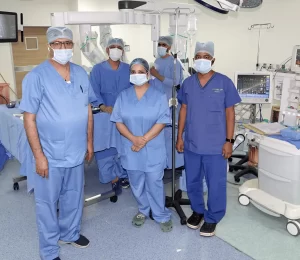
Dr. Kapoor’s team specializes in the diagnosis, treatment, and surgical repair of hernias, offering effective, minimally invasive procedures that help patients return to normal activities as quickly as possible.
When is a Hernia Surgery Needed?
In many cases, hernias do not heal on their own and can worsen over time, leading to increased pain or risk of complications. Surgery is typically recommended when:
- The hernia is painful or causes discomfort.
- The hernia is growing or becoming larger.
- There is a risk of the hernia becoming incarcerated (trapped) or strangulated (cut off from its blood supply), which can lead to tissue death and require emergency surgery.
Hernia surgery is the most effective way to repair the hernia and prevent further complications, restoring the function of the affected area and improving the patient’s quality of life.
What are the types of Hernia surgeries that are available?
Dr. Kapoor suggests several options for hernia surgery, each tailored to the specific type and severity of the hernia. The most common approaches include:
- Open Hernia Repair (Herniorrhaphy):
In this traditional procedure, one single larger incision is made near the hernia site to access the affected area, push the protruding tissue back into place, and repair the weak spot in the muscle. The repair is typically reinforced with mesh to provide additional support. - Laparoscopic Hernia Repair (Minimally Invasive):
This approach uses small incisions and a camera to guide the surgeon in repairing the hernia. Laparoscopic surgery typically results in less pain, smaller scars, and a quicker recovery time compared to open surgery. - Robotic Hernia Surgery:
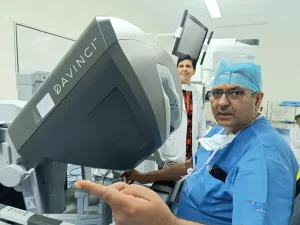
Using robotic-assisted technology, this minimally invasive option offers enhanced precision and control, allowing the surgeon to perform the repair with greater accuracy. Robotic surgery can be used for both inguinal and other types of hernias. - Mesh Repair:
In many cases, hernia repairs are reinforced with synthetic mesh to strengthen the abdominal wall and reduce the chance of recurrence. The mesh is typically placed over the defect or in the area of weakness and is safely absorbed by the body over time.
What should somebody expect before, during, and after surgery?
Before Surgery:
Before surgery, Dr. Kapoor’s team will perform a thorough evaluation, which may include physical exams and imaging tests to determine the exact size and location of the hernia. Depending on the severity of the hernia, surgery may be scheduled as an outpatient procedure or require a short hospital stay.
During Surgery:
During surgery, the patient is typically under general anesthesia to ensure comfort. For open hernia repairs, a larger incision is made to access the hernia, while laparoscopic and robotic procedures use smaller incisions for a more minimally invasive approach.
After Surgery:
After surgery, patients are monitored for any complications and provided with post-operative instructions, including how to care for the incision site, manage pain, and gradually return to regular activities. Most patients are able to resume light activities within a few days to a week, although more strenuous exercise and heavy lifting may need to be avoided for a few weeks or longer.
What are the long-term benefits of Hernia surgery?
Hernia surgery provides long-term relief by repairing the weak area in the muscle wall, preventing the hernia from recurring and alleviating symptoms like pain or bulging. Most patients experience significant improvements in comfort and function after surgery, allowing them to return to normal activities without fear of further complications.
For those with larger hernias or more complex cases, surgery offers the opportunity to prevent the hernia from causing serious issues, such as bowel obstruction or strangulation, which require emergency intervention.
If you are experiencing the symptoms of a hernia, don’t wait to seek medical advice. Dr. Kapoor’s team will work with you to assess your condition, discuss treatment options, and help you decide whether surgery is the right solution for your hernia.
A hernia develops when an internal part of the body, such as the intestines, pushes through a weakened area in the surrounding muscle or tissue. There are several types of hernias, including:
- Inguinal Hernia: The most common type, occurring in the groin area when a part of the intestine pushes through the abdominal wall or into the inguinal canal.
- Hiatal Hernia: A condition where a portion of the stomach pushes upward into the chest cavity through the diaphragm.
- Umbilical Hernia: Occurs when part of the intestine or fatty tissue pushes through the abdominal wall near the belly button.
- Incisional Hernia: Can develop after abdominal surgery, when a weakness in the abdominal wall allows tissue to push through the incision site.
- Femoral Hernia: Less common, this type occurs when tissue pushes through a weakened area near the femoral artery in the groin.
While some hernias may not cause significant symptoms, others can cause pain, discomfort, and more severe complications like bowel obstruction or strangulation.
Hernia surgery refers to the surgical procedures performed to treat a hernia, which occurs when an organ or tissue pushes through a weak spot or opening in the surrounding muscle or connective tissue.
Hernias are common and can occur in various areas of the body, most frequently in the abdomen. While some hernias are relatively harmless and can be managed with lifestyle changes, others can lead to pain, complications, and even life-threatening conditions if left untreated.
Dr. Kapoor’s team specializes in the diagnosis, treatment, and surgical repair of hernias, offering effective, minimally invasive procedures that help patients return to normal activities as quickly as possible.
In many cases, hernias do not heal on their own and can worsen over time, leading to increased pain or risk of complications. Surgery is typically recommended when:
- The hernia is painful or causes discomfort.
- The hernia is growing or becoming larger.
- There is a risk of the hernia becoming incarcerated (trapped) or strangulated (cut off from its blood supply), which can lead to tissue death and require emergency surgery.
Hernia surgery is the most effective way to repair the hernia and prevent further complications, restoring the function of the affected area and improving the patient’s quality of life.
Dr. Kapoor suggests several options for hernia surgery, each tailored to the specific type and severity of the hernia. The most common approaches include:
- Open Hernia Repair (Herniorrhaphy):
In this traditional procedure, one single larger incision is made near the hernia site to access the affected area, push the protruding tissue back into place, and repair the weak spot in the muscle. The repair is typically reinforced with mesh to provide additional support. - Laparoscopic Hernia Repair (Minimally Invasive):
This approach uses small incisions and a camera to guide the surgeon in repairing the hernia. Laparoscopic surgery typically results in less pain, smaller scars, and a quicker recovery time compared to open surgery. - Robotic Hernia Surgery:
Using robotic-assisted technology, this minimally invasive option offers enhanced precision and control, allowing the surgeon to perform the repair with greater accuracy. Robotic surgery can be used for both inguinal and other types of hernias. - Mesh Repair:
In many cases, hernia repairs are reinforced with synthetic mesh to strengthen the abdominal wall and reduce the chance of recurrence. The mesh is typically placed over the defect or in the area of weakness and is safely absorbed by the body over time.
Before Surgery:
Before surgery, Dr. Kapoor’s team will perform a thorough evaluation, which may include physical exams and imaging tests to determine the exact size and location of the hernia. Depending on the severity of the hernia, surgery may be scheduled as an outpatient procedure or require a short hospital stay.
During Surgery:
During surgery, the patient is typically under general anesthesia to ensure comfort. For open hernia repairs, a larger incision is made to access the hernia, while laparoscopic and robotic procedures use smaller incisions for a more minimally invasive approach.
After Surgery:
After surgery, patients are monitored for any complications and provided with post-operative instructions, including how to care for the incision site, manage pain, and gradually return to regular activities. Most patients are able to resume light activities within a few days to a week, although more strenuous exercise and heavy lifting may need to be avoided for a few weeks or longer.
Hernia surgery provides long-term relief by repairing the weak area in the muscle wall, preventing the hernia from recurring and alleviating symptoms like pain or bulging. Most patients experience significant improvements in comfort and function after surgery, allowing them to return to normal activities without fear of further complications.
For those with larger hernias or more complex cases, surgery offers the opportunity to prevent the hernia from causing serious issues, such as bowel obstruction or strangulation, which require emergency intervention.
If you are experiencing the symptoms of a hernia, don’t wait to seek medical advice. Dr. Kapoor’s team will work with you to assess your condition, discuss treatment options, and help you decide whether surgery is the right solution for your hernia.