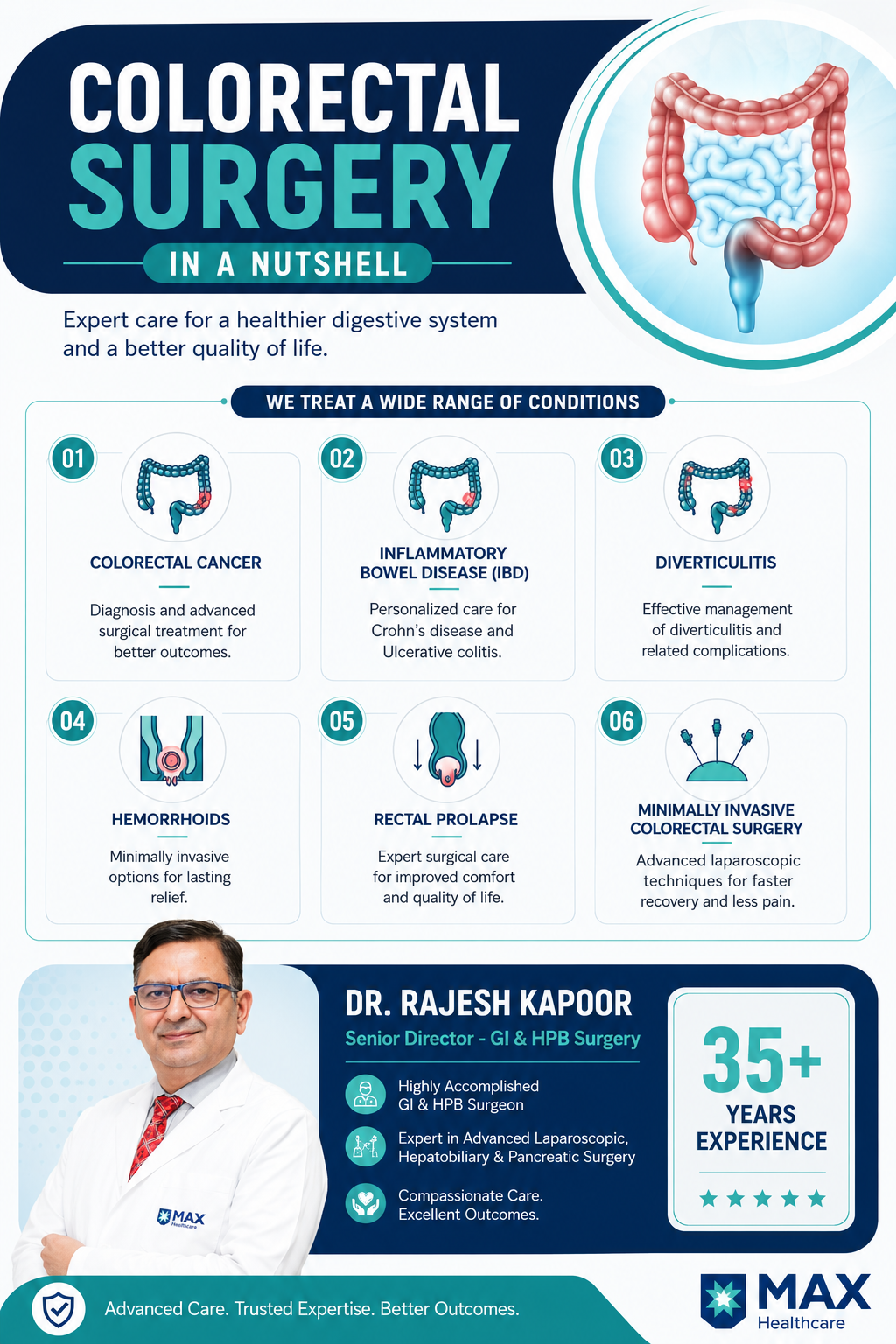
Colorectal Surgery: Advanced Solutions for Digestive Health and Wellness
The colon, rectum, and anus are vital components of the digestive system, playing a crucial role in processing waste and maintaining overall gastrointestinal health. When diseases or disorders affect these organs, they can lead to significant discomfort, pain, bleeding, digestive disturbances, and even life-threatening complications. Colorectal surgery is a specialized field of medicine focused on diagnosing and treating conditions involving the lower gastrointestinal (GI) tract, helping patients regain their health, comfort, and quality of life.
With advancements in medical technology, colorectal surgery has evolved significantly over the years. Today, minimally invasive laparoscopic and robotic-assisted procedures allow surgeons to perform complex operations with greater precision, reduced pain, shorter hospital stays, and faster recovery times.
At Dr. Rajesh Kapoor’s practice, patients receive comprehensive colorectal care for both common and complex conditions affecting the colon, rectum, and anus. Through a personalized treatment approach and state-of-the-art surgical techniques, patients can achieve optimal outcomes and improved digestive health.
Understanding Colorectal Surgery:
Colorectal surgery encompasses a wide range of procedures designed to treat diseases and disorders of the lower digestive tract. These surgeries may involve removing diseased tissue, repairing structural abnormalities, treating infections, or managing cancerous growths.
While many colorectal conditions can initially be managed through medications, dietary changes, or other non-surgical treatments, surgery may become necessary when symptoms persist, complications develop, or there is a risk of serious health consequences.
The primary goals of colorectal surgery include:
- Eliminating disease or infection
- Relieving pain and discomfort
- Restoring normal bowel function
- Preventing disease progression
- Improving long-term quality of life
- Reducing the risk of complications
Common Conditions Treated with Colorectal Surgery:
Colorectal Cancer: Colorectal cancer is one of the most frequently diagnosed cancers worldwide. It develops when abnormal cells grow uncontrollably in the colon or rectum, often beginning as small non-cancerous polyps.
Risk factors may include:
- Family history of colorectal cancer
- Age over 45 years
- Obesity
- Smoking
- Inflammatory bowel disease
- Sedentary lifestyle
- Diet high in processed foods
Symptoms may include:
- Blood in stool
- Persistent changes in bowel habits
- Abdominal pain or cramping
- Unexplained weight loss
- Fatigue and weakness
Surgical treatment remains the cornerstone of colorectal cancer management. Depending on the stage and location of the cancer, surgery may involve removing part of the colon, rectum, or surrounding lymph nodes. Early diagnosis and timely intervention significantly improve survival rates and long-term outcomes.
Inflammatory Bowel Disease (IBD) : Inflammatory Bowel Disease includes chronic inflammatory conditions such as Crohn’s disease and ulcerative colitis. These disorders cause ongoing inflammation in the digestive tract, leading to pain, bleeding, and impaired bowel function.
Common symptoms include:
- Chronic diarrhea
- Rectal bleeding
- Severe abdominal pain
- Weight loss
- Fatigue
- Nutritional deficiencies
Although medications can help control inflammation, surgery may become necessary when complications such as strictures, fistulas, perforations, or severe disease progression occur.
Diverticulitis: Diverticulitis develops when small pouches called diverticula form in the colon wall and become inflamed or infected.
Patients often experience:
- Lower abdominal pain
- Fever and chills
- Nausea and vomiting
- Constipation or diarrhea
- Abdominal tenderness
Recurrent episodes or severe infections can damage the colon and increase the risk of complications. Surgical treatment may involve removing the affected segment of the colon to prevent future episodes and improve digestive function.
Hemorrhoids: Hemorrhoids are swollen veins in the rectum or anus that can cause discomfort, itching, bleeding, and pain during bowel movements.
While many hemorrhoids respond to lifestyle changes and office-based treatments, advanced cases may require hemorrhoidectomy to permanently remove the affected tissue and provide lasting relief.
Rectal Prolapse: Rectal prolapse occurs when the rectum slips from its normal position and protrudes through the anus. This condition is more common among older adults and can significantly impact quality of life.
Symptoms may include:
- Tissue protruding from the anus
- Difficulty controlling bowel movements
- Rectal discomfort
- Constipation
- Mucus discharge
Surgical repair restores the rectum to its proper position and helps improve bowel function and continence.
Colon Polyps: Colon polyps are abnormal growths that develop on the lining of the colon. Although many polyps are harmless, some can become cancerous if left untreated.
Regular screening and timely removal of polyps are essential for preventing colorectal cancer and maintaining long-term digestive health.
Anal Fistulas and Abscesses: An anal abscess is a painful infection that results in a collection of pus near the anus. If untreated, it may lead to the formation of an anal fistula, an abnormal tunnel connecting the anal canal to the skin.
Symptoms may include:
- Pain and swelling
- Drainage of pus
- Fever
- Skin irritation
Surgical treatment is often necessary to eliminate infection, close the fistula tract, and prevent recurrence.
Advanced Types of Colorectal Surgery
Colorectal Cancer Surgery: Cancer surgery aims to remove the tumor and surrounding affected tissues while preserving healthy bowel function whenever possible. The exact procedure depends on the size, stage, and location of the cancer.
Modern cancer surgery often incorporates minimally invasive techniques to reduce recovery time and improve outcomes.
Robotic and Laparoscopic Colon Surgery : Minimally invasive colorectal surgery has revolutionized patient care. Instead of large incisions, surgeons use small ports and specialized instruments to perform complex operations.
Benefits include:
- Less postoperative pain
- Smaller scars
- Reduced blood loss
- Lower risk of infection
- Faster recovery
- Earlier return to daily activities
- Shorter hospitalization
Robotic-assisted surgery provides enhanced visualization and greater precision, particularly for complex pelvic and rectal procedures.
Hemorrhoidectomy : For severe or recurrent hemorrhoids, hemorrhoidectomy offers a permanent solution by removing enlarged hemorrhoidal tissue and relieving symptoms such as bleeding, itching, and pain.
Colectomy : A colectomy involves removing a portion or the entirety of the colon. It may be performed for:
- Colon cancer
- Severe diverticulitis
- Crohn’s disease
- Ulcerative colitis
- Large polyps
- Bowel obstruction
Depending on the condition, the remaining healthy sections of the bowel are reconnected to maintain normal digestive function.
Proctectomy: A proctectomy involves removing part or all of the rectum and is commonly performed for rectal cancer or advanced inflammatory bowel disease.
Advanced surgical planning helps preserve bowel control and maintain the patient’s quality of life whenever possible.
Rectal Prolapse Repair : This procedure restores the rectum to its normal anatomical position and helps improve bowel control, reduce discomfort, and prevent recurrence.
Benefits of Minimally Invasive Colorectal Surgery: Patients undergoing laparoscopic or robotic colorectal surgery often experience numerous advantages compared to traditional open surgery.
Key Benefits Include:
- Smaller incisions
- Less postoperative discomfort
- Reduced scarring
- Faster healing
- Lower risk of wound complications
- Reduced hospital stay
- Quicker return to work and normal activities
- Improved surgical precision
- Better cosmetic outcomes
These benefits make minimally invasive surgery an excellent option for many colorectal conditions.
Signs You Should See a Colorectal Specialist : Many people ignore symptoms related to digestive health until they become severe. Early evaluation by a specialist can lead to timely diagnosis and more effective treatment.
Consult a colorectal surgeon if you experience:
- Persistent rectal bleeding
- Blood in stool
- Chronic constipation
- Chronic diarrhea
- Unexplained abdominal pain
- Difficulty passing stool
- Changes in bowel habits lasting several weeks
- Unintentional weight loss
- Family history of colorectal cancer
- Recurrent anal infections or abscesses
Early intervention can often prevent serious complications and improve treatment outcomes.
Why Choose Dr. Rajesh Kapoor for Colorectal Surgery?
Dr. Rajesh Kapoor is a highly experienced GI, HPB, and Robotic Surgeon with more than 35+ years of expertise in managing complex colorectal and gastrointestinal conditions. As the Director and Head of GI & HPB Surgery at Max Healthcare, he specializes in advanced colorectal procedures, including colorectal cancer surgery, laparoscopic and robotic colon surgery, colectomy, proctectomy, hemorrhoid surgery, and rectal prolapse repair.
Patients benefit from:
- Over 35+ years of surgical excellence
- Expertise in complex colorectal and gastrointestinal surgeries
- Advanced robotic and minimally invasive surgical techniques
- Personalized treatment plans tailored to each patient
- Faster recovery with reduced postoperative discomfort
- Comprehensive pre-operative and post-operative care
- International standards of patient safety and surgical precision
Dr. Rajesh Kapoor offers advanced colorectal surgery at Max Healthcare, Noida, serving patients from Noida, Delhi, Meerut, Ghaziabad, Greater Noida, and across the NCR region. His commitment to clinical excellence, innovation, and patient-centered care has made him one of the most trusted colorectal and GI surgeons in North India.
Whether you require treatment for colorectal cancer, diverticulitis, inflammatory bowel disease, hemorrhoids, colon polyps, fistulas, or rectal prolapse, Dr. Kapoor provides comprehensive care using the latest surgical technologies to ensure the best possible outcomes and long-term digestive health.
Frequently Asked Questions (FAQs)
1. What is colorectal surgery?
Colorectal surgery is a specialty that focuses on treating diseases and conditions affecting the colon, rectum, and anus through surgical procedures.
2. What conditions commonly require colorectal surgery?
Common conditions include colorectal cancer, inflammatory bowel disease, diverticulitis, hemorrhoids, colon polyps, rectal prolapse, and anal fistulas.
3. Is colorectal surgery safe?
Yes. Modern colorectal surgery is generally very safe, especially when performed by an experienced specialist using advanced minimally invasive techniques.
4. What is robotic colorectal surgery?
Robotic colorectal surgery uses robotic-assisted technology that provides enhanced precision, flexibility, and visualization during surgery.
5. How long does recovery take after colorectal surgery?
Recovery depends on the procedure performed. Minimally invasive surgeries often allow patients to resume normal activities within two to six weeks.
6. Can colorectal cancer be cured through surgery?
When diagnosed in its early stages, surgery can often completely remove colorectal cancer and provide excellent long-term outcomes.
7. Are hemorrhoids always treated surgically?
No. Many hemorrhoids can be managed with medications, dietary changes, and non-surgical procedures. Surgery is typically reserved for severe or recurrent cases.
8. What is a colectomy?
A colectomy is the surgical removal of part or all of the colon to treat conditions such as cancer, inflammatory bowel disease, or severe diverticulitis.
9. Will I need a colostomy after colorectal surgery?
Not all patients require a colostomy. The need depends on the specific condition and procedure being performed.
10. When should I undergo colorectal cancer screening?
Most adults should begin colorectal cancer screening at age 45, although individuals with risk factors or a family history may need earlier screening.
11. What are the warning signs of colorectal cancer?
Symptoms may include rectal bleeding, blood in stool, changes in bowel habits, abdominal pain, unexplained weight loss, and fatigue.
12. Why is early treatment important for colorectal conditions?
Early diagnosis and treatment can prevent complications, improve recovery, and significantly enhance long-term health outcomes.
Leave a Reply