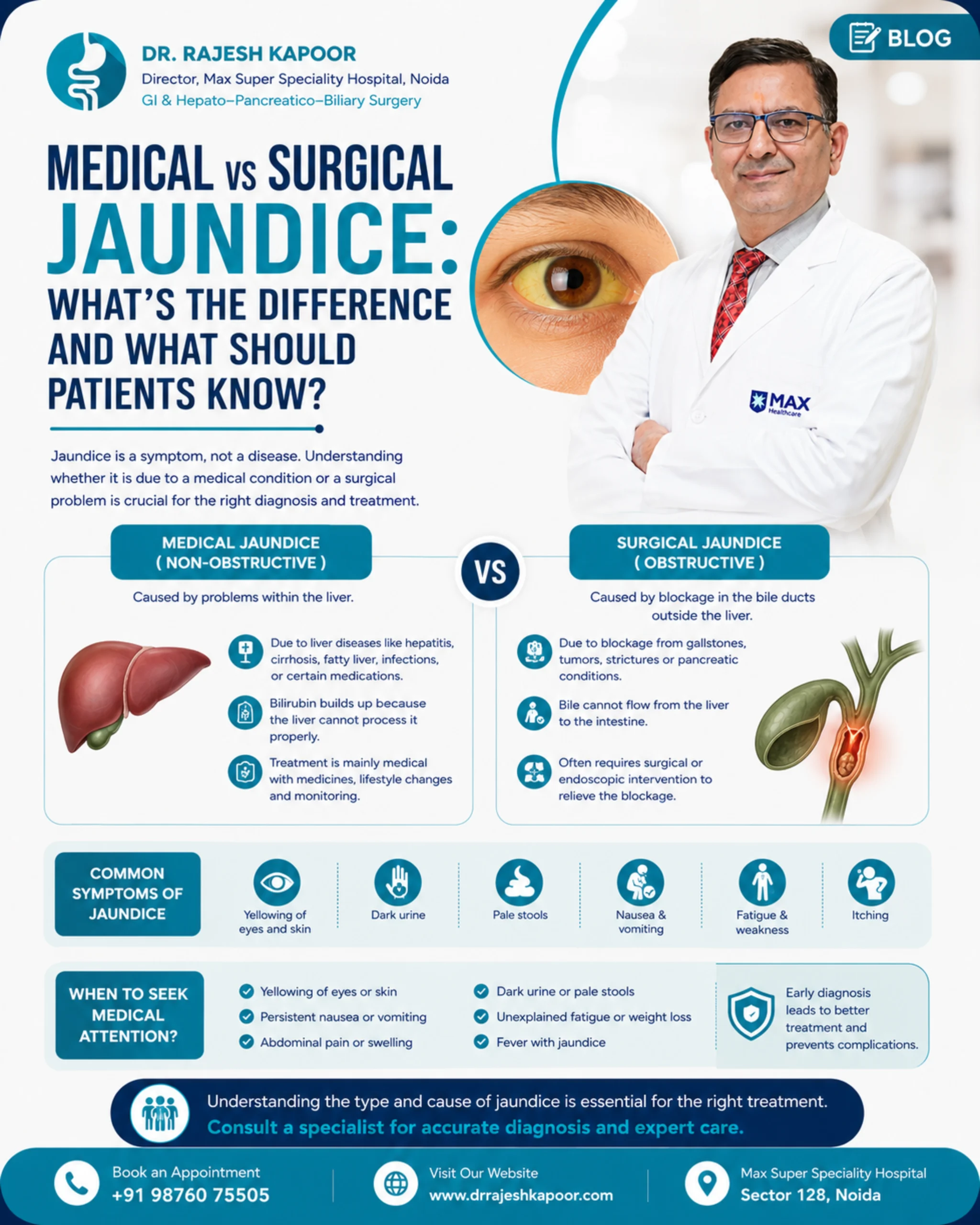
Jaundice is a common medical condition where the skin, eyes, and sometimes other tissues turn yellow. This happens because of a buildup of a yellow substance in the body called *bilirubin, which is normally processed and removed by the liver. While jaundice itself is a sign of an underlying issue—not a disease on its own—understanding *what kind of jaundice a person has is crucial for proper treatment.
Broadly, jaundice can be classified into two main types: medical jaundice and surgical jaundice. In this blog post, we’ll explain both types in simple terms, how to tell the difference between them, and what patients need to keep in mind.

What Is Medical Jaundice?
Medical jaundice refers to jaundice caused by problems inside the liver itself. In other words, the liver is not functioning properly due to a disease or infection, so it cannot process bilirubin the way it should. As a result, bilirubin builds up in the body.
Common causes of medical jaundice:
- Hepatitis (inflammation of the liver due to a virus or alcohol)
- Cirrhosis (scarring of the liver, often from long-term alcohol use or chronic hepatitis)
- Fatty liver disease
- Liver cancer
- Drug-induced liver injury (from certain medications or toxins)
Symptoms of medical jaundice may include:
- Yellowing of the skin and eyes
- Fatigue and weakness
- Loss of appetite
- Nausea and vomiting
- Dark-colored urine
- Mild or no itching
Because the liver itself is sick, patients may also have signs of liver failure if the damage is advanced.
What Is Surgical Jaundice?
*Surgical jaundice, on the other hand, happens when *there is a blockage in the tubes (called bile ducts) that carry bile and bilirubin from the liver to the intestine. The liver is working fine, but the problem lies in draining the bilirubin out of the liver.
This blockage prevents bilirubin from leaving the liver, leading to its buildup in the blood and resulting in jaundice.
Common causes of surgical jaundice:
- Gallstones blocking the bile ducts
- Tumors in the pancreas, bile ducts, or nearby organs
- Strictures (narrowing) of the bile ducts
- Parasites in some countries (e.g., liver flukes)
- Post-surgical complications involving the bile duct
Symptoms of surgical jaundice may include:
- Yellowing of the skin and eyes
- Severe itching (much more than in medical jaundice)
- Pale or clay-colored stools
- Dark urine
- Abdominal pain (especially in the upper right side)
- Fever and chills (if infection is present)
Because there is a mechanical blockage, this type of jaundice often requires surgical or interventional treatment, not just medication.
How to Tell the Difference?
Doctors use a combination of symptoms, blood tests, and imaging studies to differentiate between medical and surgical jaundice. Here are some key points of difference:
| Feature | Medical Jaundice | Surgical Jaundice |
|---|---|---|
| Cause | Liver disease (hepatitis, cirrhosis, etc.) | Obstruction of bile ducts (gallstones, tumors) |
| Liver function tests (LFTs) | High liver enzymes (ALT, AST) | High bilirubin, especially direct bilirubin; high ALP and GGT |
| Itching | Usually mild | Often severe |
| Stool color | Normal or slightly pale | Clay-colored |
| Abdominal pain | Often absent or mild | Common, especially with gallstones |
| Fever | Uncommon (unless there’s an infection) | May occur with bile duct infections (cholangitis) |
| Ultrasound/CT scan | May show liver damage | May show dilated bile ducts or obstruction |
What Should Patients Know?
If you or someone you know has jaundice, here are some important things to remember:
1. Don’t ignore yellowing of the eyes or skin
Jaundice is not normal—it’s your body’s way of signaling a serious internal issue. Always consult a doctor if you notice yellow discoloration.
2. Early diagnosis is key
The sooner doctors can find out whether your jaundice is medical or surgical, the faster they can treat the cause. Waiting too long can lead to complications, especially if the bile ducts are blocked.
3. Imaging is important
Simple tests like an ultrasound can quickly detect a blockage in the bile ducts. If needed, more advanced imaging like CT scan, MRI, or ERCP (a type of endoscopy) may be used.
4. Surgical jaundice often needs procedures
If the problem is due to a gallstone or a tumor blocking the duct, medication alone won’t help. A surgical or endoscopic procedure might be needed to remove the obstruction.
5. Follow-up care matters
Liver diseases like hepatitis and cirrhosis need long-term follow-up and lifestyle changes. Even after treatment, it’s important to monitor liver function regularly.
Conclusion
Jaundice is a visible symptom that something is wrong, but not all jaundice is the same. Medical jaundice points to a problem *within the liver, while *surgical jaundice suggests an obstruction outside the liver that stops bile flow.
Understanding the difference helps both patients and caregivers make informed decisions and seek the right treatment at the right time. If you or a loved one has jaundice, don’t wait—get it evaluated promptly and follow your doctor’s advice carefully.
Leave a Reply