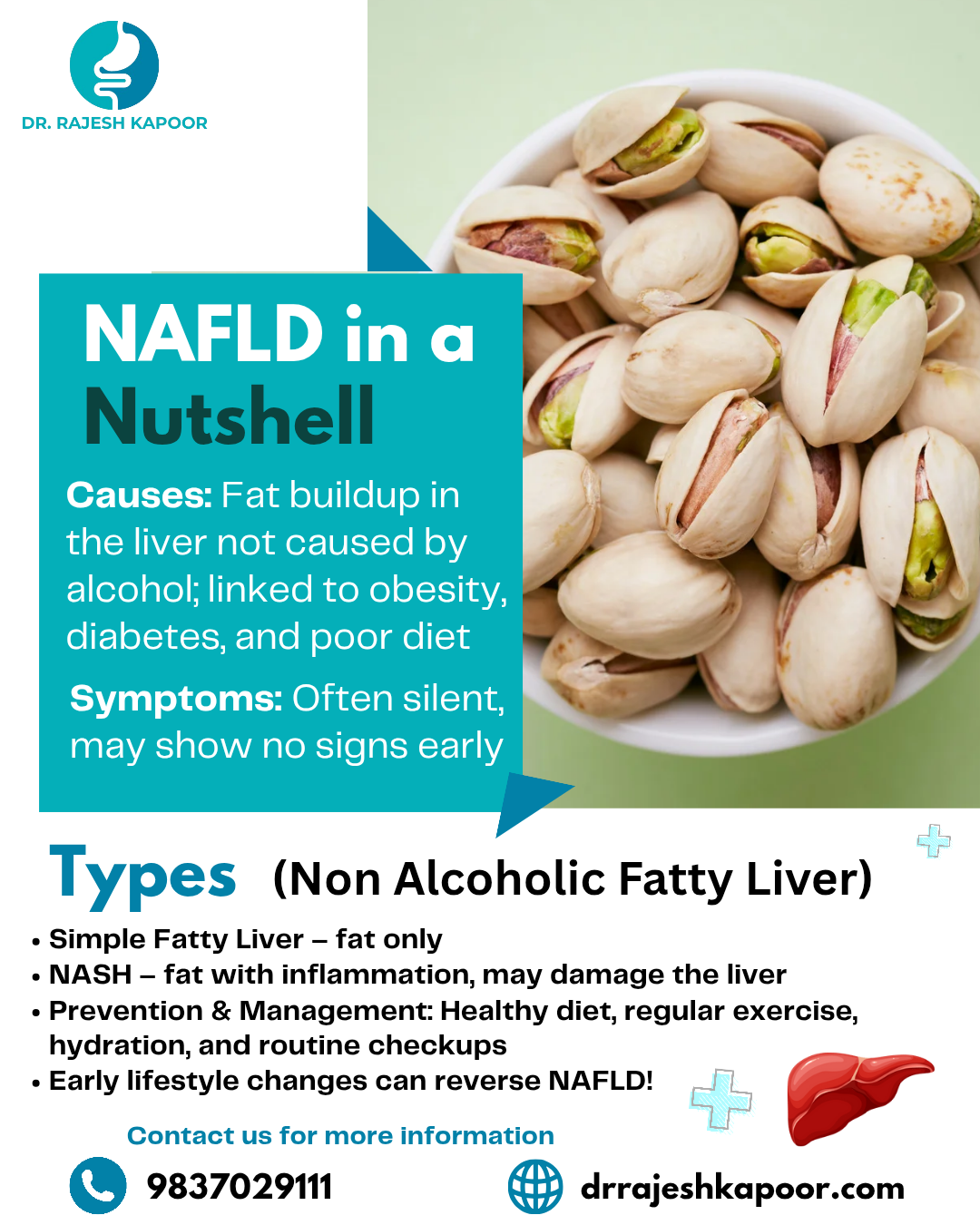
When we hear the term “fatty liver,” most people think it happens only to those who drink alcohol. But the truth is — even people who never drink alcohol can develop a fatty liver. This condition is called Non-Alcoholic Fatty Liver Disease (NAFLD), and it is becoming very common in India today.
Let’s understand what it really means, why it happens, and how we can manage it through simple lifestyle changes.
🧠 What Is NAFLD?
Non-Alcoholic Fatty Liver Disease (NAFLD) is a condition where extra fat builds up in the liver of a person who does not consume alcohol or drinks very little.
Normally, the liver helps our body digest food, store energy, and remove toxins. But when too much fat accumulates inside it, the liver becomes swollen and inflamed, which can harm its normal function.
Doctors usually diagnose NAFLD when more than 5–10% of the liver’s weight is made up of fat.
🩸 Two Main Types of NAFLD
NAFLD can be of two main types:
- Simple Fatty Liver (Steatosis):
Fat is present in the liver, but there is no serious inflammation or damage. This type is usually not dangerous if managed early. - Non-Alcoholic Steatohepatitis (NASH):
Here, the fat causes inflammation and liver cell damage. Over time, this can lead to fibrosis (scarring), cirrhosis, or even liver failure.
🇮🇳 Why NAFLD Is Rising in India
India is now considered one of the NAFLD capitals of the world. Doctors say this increase is closely linked to our modern lifestyle and food habits. Some key reasons are:
- Unhealthy Diet:
Frequent consumption of fried food, sweets, junk food, refined flour (maida), and sugary drinks. - Lack of Physical Activity:
Long working hours, sitting for too long, and little exercise. - Obesity and Weight Gain:
Especially belly fat, which is strongly linked to liver fat buildup. - Diabetes and Insulin Resistance:
People with type 2 diabetes or high insulin levels are at higher risk. - High Cholesterol or Triglycerides:
Excess fats in the blood contribute to liver fat storage. - Genetic Factors:
Some people are naturally more prone to developing fatty liver due to their family history.
According to studies, about 1 in 3 urban Indians may have some degree of fatty liver — even young adults in their 20s and 30s.
⚠️ Common Symptoms of NAFLD
In the early stages, most people do not have any symptoms. The disease is often found accidentally during routine health checkups or ultrasound scans.
However, some people may experience:
- Constant tiredness or fatigue
- Mild pain or discomfort in the upper right side of the abdomen
- Bloating or indigestion
- Unexplained weight gain
- Difficulty in losing weight
As the disease progresses, symptoms can become more serious, including jaundice (yellowing of skin and eyes), swelling in legs, or confusion due to liver dysfunction.
🧪 How NAFLD Is Diagnosed
Doctors usually recommend a few tests to confirm NAFLD:
- Ultrasound of the abdomen: First and most common test to detect fatty liver.
- Liver function tests (LFT): To check if the liver is inflamed.
- Fibroscan or MRI: To assess the stiffness or scarring of the liver.
- Blood sugar and lipid profile: To check for diabetes and cholesterol levels.
In some cases, a liver biopsy may be done for accurate diagnosis.
🍎 How to Manage NAFLD
The best part is — NAFLD can often be reversed in its early stages through lifestyle changes. Here’s how:
1. Maintain a Healthy Weight
If you are overweight, gradual and steady weight loss helps reduce liver fat. Losing even 5–10% of your body weight can make a big difference.
2. Eat a Balanced, Home-Cooked Diet
Follow a diet rich in:
- Fresh fruits and vegetables
- Whole grains like brown rice, dalia, and millets
- Lean proteins such as dal, eggs, chicken, or fish
- Healthy fats from nuts, seeds, and olive or mustard oil
Avoid:
- Fried and oily foods
- Sweets, bakery items, and sugary beverages
- White bread, maida, and processed foods
3. Exercise Regularly
Aim for at least 30–45 minutes of physical activity daily — walking, cycling, yoga, or swimming. Regular exercise helps burn liver fat and improves insulin sensitivity.
4. Control Diabetes and Cholesterol
If you have diabetes, high blood pressure, or high cholesterol, follow your doctor’s advice carefully. Keeping these under control protects your liver.
5. Avoid Alcohol and Smoking
Even small amounts of alcohol can worsen liver damage if you already have NAFLD. Smoking increases the risk of inflammation and fibrosis.
6. Stay Hydrated
Drink enough water throughout the day. Avoid sugary drinks, energy drinks, and sodas.
7. Get Regular Checkups
Regular liver checkups every 6–12 months help monitor your progress and ensure the condition doesn’t worsen.
🌿 Can Home Remedies Help?
Some natural ingredients may support liver health — but they should not replace medical treatment.
For example:
- Turmeric (Haldi) – has anti-inflammatory properties.
- Amla (Indian gooseberry) – rich in vitamin C and antioxidants.
- Green tea – may help reduce fat accumulation in the liver.
Always talk to your doctor before starting any supplements or herbal medicines.
💡 Key Takeaway
Non-Alcoholic Fatty Liver Disease is a lifestyle-related condition, not just a liver problem. The good news is — it can be prevented and even reversed with timely lifestyle changes.
A balanced diet, regular exercise, maintaining healthy weight, and routine checkups can protect your liver and overall health.
👨⚕️ Final Word
Your liver silently works day and night to keep your body healthy — but it needs your support too.
By making small, consistent changes in your daily habits, you can keep your liver strong and avoid serious problems in the future.
Remember: You have only one liver — treat it with care!
Contact Us
Leave a Reply