- Satyam Kapoor
- 0 Comments
In India, stomach problems are one of the most common health complaints. Whether it’s spicy food, irregular meals, or stress — digestive issues have become a part of daily life for many.
Most of the time, these problems are minor and go away with home remedies or rest. But sometimes, they can be a sign of something more serious that needs medical attention.
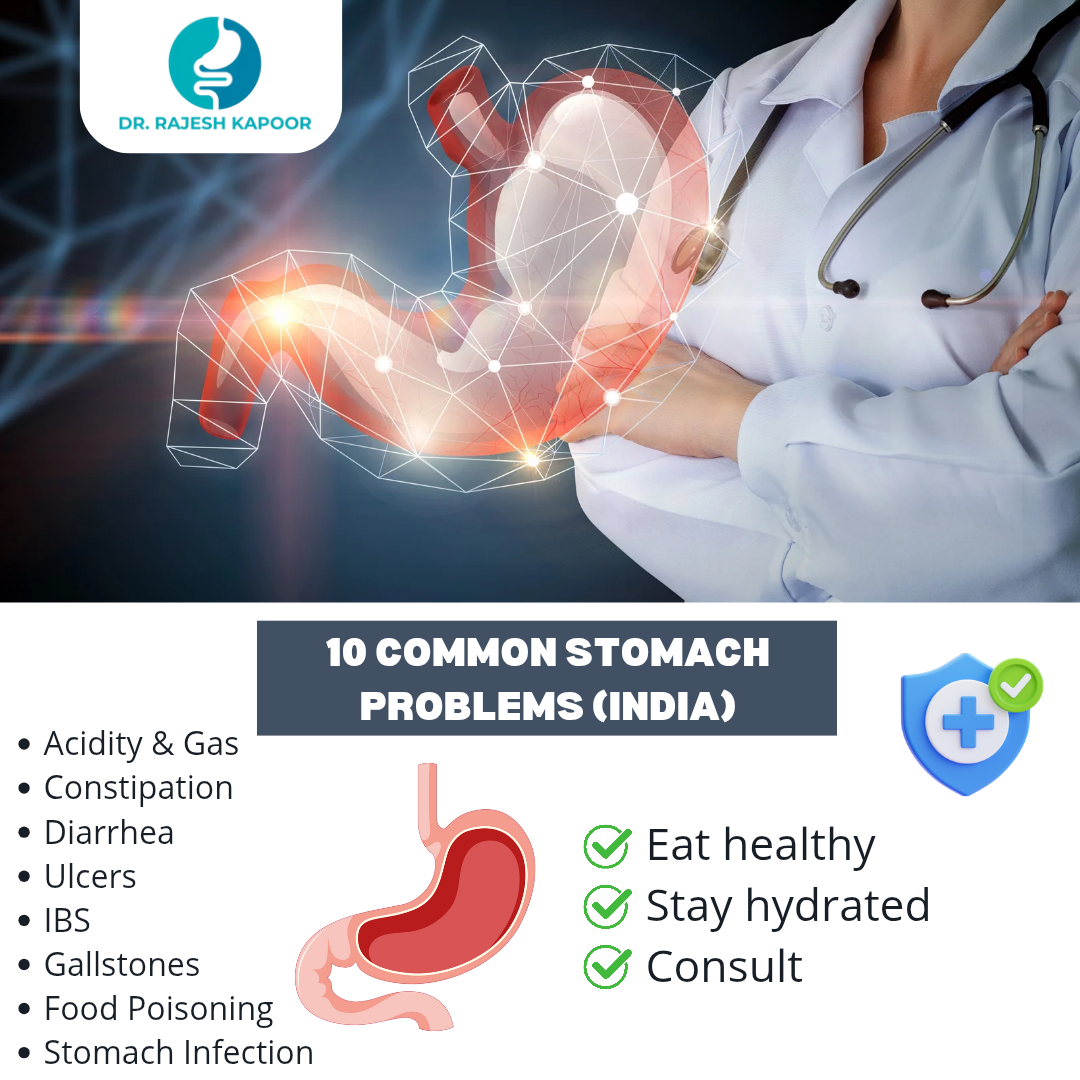
In this blog, we’ll look at the 10 most common stomach problems Indians face, their symptoms, and when you should consult a gastroenterologist (a specialist doctor for the digestive system).
1. Acidity and Heartburn
What It Is:
Acidity happens when stomach acid flows back into the food pipe (esophagus), causing a burning feeling in the chest — known as heartburn.
Common Causes:
Eating oily or spicy food, skipping meals, lying down right after eating, smoking, and stress.
When to See a Doctor:
If acidity occurs more than twice a week, causes vomiting, or you feel constant chest burning, consult a gastroenterologist. It may be GERD (Gastroesophageal Reflux Disease).
2. Gas and Bloating
What It Is:
Gas forms naturally in the stomach, but excess gas leads to discomfort, bloating, or burping.
Common Causes:
Overeating, consuming carbonated drinks, or eating too fast. Some foods like rajma (kidney beans), cauliflower, and cabbage also increase gas.
When to See a Doctor:
If bloating happens daily or is accompanied by abdominal pain, it could indicate Irritable Bowel Syndrome (IBS) or lactose intolerance.
3. Constipation
What It Is:
Difficulty in passing stool or infrequent bowel movements (less than three times a week).
Common Causes:
Low-fiber diet, dehydration, lack of exercise, or ignoring the urge to go to the toilet.
When to See a Doctor:
If constipation lasts more than two weeks, or you notice blood in stool, it’s time to visit a specialist. Chronic constipation can lead to piles (hemorrhoids) or anal fissures.
4. Diarrhea
What It Is:
Passing loose or watery stools frequently, often caused by infection or food poisoning.
Common Causes:
Contaminated water or food, street food, or viral/bacterial infections.
When to See a Doctor:
If diarrhea lasts more than 2–3 days, causes dehydration, fever, or blood in stool, consult a gastroenterologist immediately. It may be a sign of intestinal infection or inflammatory bowel disease (IBD).
5. Food Poisoning
What It Is:
A sudden stomach upset after eating contaminated or spoiled food.
Common Symptoms:
Vomiting, diarrhea, stomach cramps, fever, and dehydration.
When to See a Doctor:
If symptoms are severe, especially in children or elderly people, or if dehydration becomes serious (dry mouth, less urination, weakness), visit a hospital.
6. Stomach Ulcers
What It Is:
Painful sores in the stomach or small intestine lining, also called peptic ulcers.
Common Causes:
Infection by Helicobacter pylori bacteria, excessive painkiller use, smoking, or drinking alcohol.
Symptoms:
Burning pain in the upper abdomen, especially when the stomach is empty, nausea, or vomiting.
When to See a Doctor:
If pain is constant or you notice black or bloody stools, consult a gastroenterologist immediately.
7. Irritable Bowel Syndrome (IBS)
What It Is:
A functional disorder where the bowel doesn’t work properly, leading to stomach pain, bloating, gas, diarrhea, or constipation.
Common Causes:
Stress, unhealthy eating habits, and irregular sleep cycles — all quite common in modern Indian lifestyles.
When to See a Doctor:
If you experience alternating constipation and diarrhea, and constant discomfort even after bowel movement, get evaluated for IBS.
8. Lactose Intolerance
What It Is:
When the body cannot digest lactose — the sugar found in milk and dairy products.
Common Symptoms:
Gas, bloating, stomach cramps, and diarrhea after consuming milk, paneer, or ice cream.
When to See a Doctor:
If symptoms occur every time after dairy intake, a gastroenterologist can confirm lactose intolerance and suggest alternatives like lactose-free milk or enzyme supplements.
9. Gallstones
What It Is:
Gallstones are small, stone-like deposits that form in the gallbladder — a small organ that stores bile for digestion.
Common Symptoms:
Severe pain in the upper right abdomen (especially after fatty meals), nausea, and vomiting.
When to See a Doctor:
If pain occurs frequently or is severe, medical imaging and treatment are needed. In some cases, surgery to remove the gallbladder (cholecystectomy) may be required.
10. Stomach Infections (Gastroenteritis)
What It Is:
An infection caused by bacteria, viruses, or parasites leading to inflammation of the stomach and intestines.
Common Causes:
Poor hygiene, unfiltered water, or eating food from roadside stalls.
Symptoms:
Fever, vomiting, diarrhea, stomach cramps, and weakness.
When to See a Doctor:
If vomiting or diarrhea persists beyond two days, or you notice dehydration, consult a doctor immediately.
When to See a Gastroenterologist
Many people ignore stomach problems thinking they’ll go away on their own. However, repeated or long-lasting issues should never be ignored.
You should visit a gastroenterologist if you have:
- Persistent abdominal pain or bloating
- Blood in stool or black stools
- Unexplained weight loss
- Difficulty swallowing or frequent vomiting
- Ongoing constipation or diarrhea
Early diagnosis can prevent serious diseases like ulcers, gallstones, or even stomach cancer.
Simple Tips for a Healthy Digestive System
- Eat Balanced Meals: Include fiber-rich foods like fruits, vegetables, and whole grains.
- Stay Hydrated: Drink 7–8 glasses of water daily.
- Avoid Excess Spices and Fried Food: They irritate the stomach lining.
- Eat on Time: Skipping meals disturbs digestion.
- Exercise Regularly: Even 30 minutes of walking aids bowel movement.
- Limit Alcohol and Smoking: Both harm digestive health.
- Maintain Hygiene: Wash hands and eat freshly prepared food.
- Manage Stress: Practice yoga or meditation to keep your gut calm.
Conclusion
Stomach problems are very common among Indians — mostly due to our diet, lifestyle, and weather. While minor issues can be managed at home, persistent or severe symptoms should never be ignored.
A gastroenterologist can help find the real cause and offer proper treatment.
Remember, your stomach is the center of your health — take care of it, eat wisely, and don’t delay medical help when needed.
Because a healthy stomach means a healthy life.