- Satyam Kapoor
- 0 Comments
Introduction
Obesity has become one of the fastest-growing health concerns in India, contributing to diabetes, hypertension, fatty liver disease, and heart problems. For individuals struggling with excess weight, two modern treatment approaches have gained attention: GLP-1 receptor agonist medications (like semaglutide) and bariatric surgery.
While both methods can achieve significant weight reduction, they differ in approach, cost, risks, and long-term outcomes. This blog compares these options to help patients and families make informed decisions.
What Are GLP-1 Medications?
GLP-1 (Glucagon-Like Peptide-1) receptor agonists are a new class of injectable medications originally developed for type 2 diabetes. Drugs like semaglutide mimic natural gut hormones that:
- Reduce appetite and food cravings
- Slow stomach emptying
- Improve blood sugar control
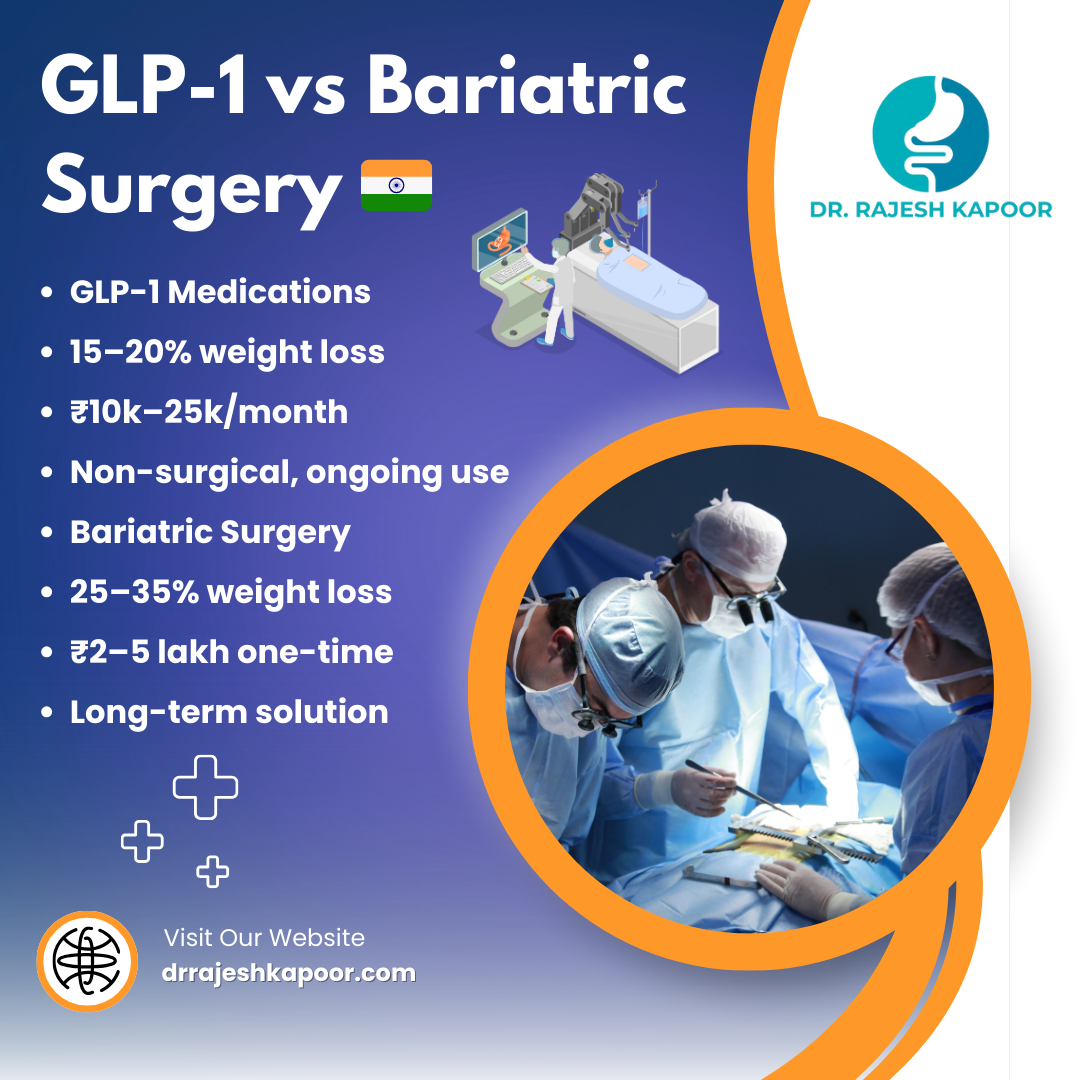
Recent studies show that GLP-1 drugs can result in 15–20% weight loss when combined with lifestyle changes. They are now being widely prescribed in India’s urban centers, especially for patients with obesity and diabetes.
What Is Bariatric Surgery?
Bariatric (weight-loss) surgery includes procedures such as:
- Sleeve gastrectomy – reducing stomach size
- Roux-en-Y gastric bypass – altering stomach and intestinal pathways
These surgeries physically limit food intake and/or change how nutrients are absorbed. Bariatric surgery in India has shown 25–35% sustained weight loss along with remission of conditions like type 2 diabetes, hypertension, and sleep apnea.
Comparing GLP-1 Medications and Bariatric Surgery
| Factor | GLP-1 Medications | Bariatric Surgery |
|---|---|---|
| Effectiveness | 15–20% weight loss | 25–35% weight loss |
| Onset of Results | Gradual, over months | Faster, within weeks |
| Invasiveness | Non-surgical, injections | Surgical procedure |
| Side Effects | Nausea, vomiting, cost burden | Surgical risks, recovery time |
| Long-Term | Continuous use needed, weight regain possible if stopped | More permanent, but some patients still need GLP-1 after surgery (~14% in studies) |
| Cost in India | ₹10,000–25,000/month (depending on brand and dose) | ₹2–5 lakh one-time (depending on hospital/city) |
Pros and Cons
Advantages of GLP-1 Medications:
- Non-surgical, no hospitalization
- Helpful for patients unfit for surgery
- Improves blood sugar, cholesterol, and cardiovascular health
- Easier to start and stop
Limitations of GLP-1 Medications:
- High ongoing cost in India
- Side effects (nausea, digestive issues)
- Weight may return if stopped
Advantages of Bariatric Surgery:
- Greater and sustained weight loss
- Can reverse diabetes, fatty liver, and hypertension
- One-time investment vs lifelong medication
Limitations of Bariatric Surgery:
- Requires surgery and recovery
- Risk of complications (though rare in expert hands)
- Need for lifelong vitamin and mineral supplements
Which Patients Benefit More?
- GLP-1 Medications may be better for:
- Overweight/obese patients not yet candidates for surgery
- Individuals with mild-to-moderate obesity (BMI 27–35)
- Patients who prefer non-surgical treatment or want to trial medical therapy
- Bariatric Surgery may be better for:
- Severe obesity (BMI > 40, or > 35 with comorbidities)
- Patients with uncontrolled diabetes despite medications
- Those who have tried and failed lifestyle or medical treatments
Indian Perspective
In India, affordability is a major factor. While urban patients are increasingly trying GLP-1 drugs, the monthly cost is often prohibitive. Bariatric surgery, though costlier upfront, may be more cost-effective long-term.
Moreover, Indian patients often present with diabetes at lower BMI levels compared to Western populations, making both GLP-1 drugs and surgery important tools in the fight against obesity and metabolic syndrome.
Conclusion
Both GLP-1 medications and bariatric surgery offer effective weight-loss solutions, but the “right” choice depends on individual health, affordability, and lifestyle goals. Patients in India should consult a gastroenterologist or bariatric surgeon to personalize their treatment plan.
In many cases, these approaches are not competitors but complements—some patients may start with GLP-1 drugs and later undergo surgery, while others may use medications even after surgery to maintain weight loss.