- Satyam Kapoor
- 0 Comments
Digestive health plays a vital role in overall well-being. In India, gastrointestinal (GI) problems are becoming increasingly common due to lifestyle changes, irregular eating habits, stress, and lack of timely medical attention. While many digestive issues such as acidity, constipation, or indigestion can be managed with routine care, some conditions require urgent attention and immediate medical intervention. These are called critical gastrointestinal (GI) interventions, and they can often be lifesaving.
This blog explores the importance of timely interventions for complex digestive conditions, what patients in India need to know, and how modern medical technology is improving outcomes.
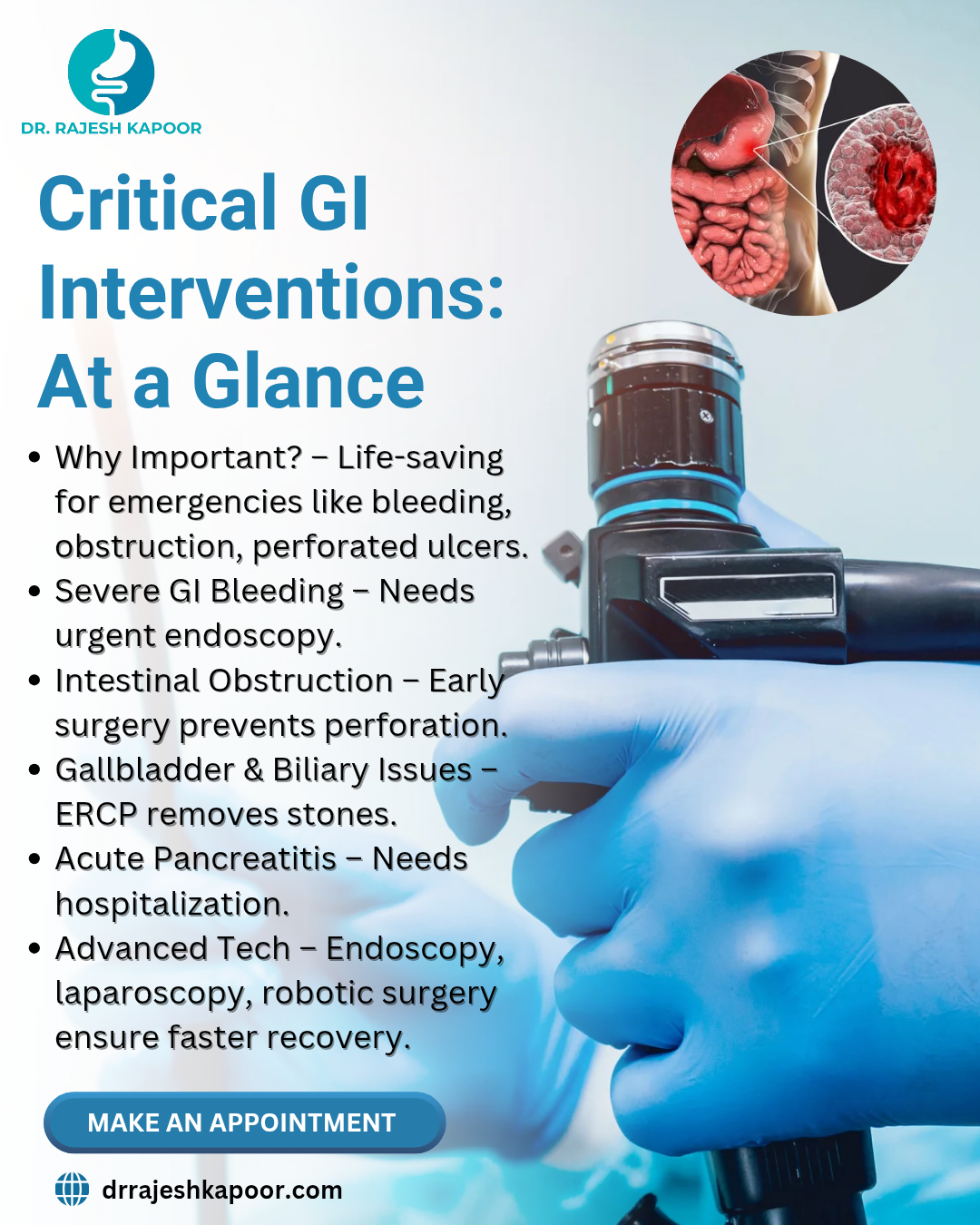
Why Critical GI Interventions Matter
The digestive system is complex, involving organs such as the stomach, intestines, pancreas, liver, and gallbladder. A minor disturbance in any of these can affect the entire system.
However, when conditions like gastrointestinal bleeding, intestinal obstruction, perforated ulcers, or severe pancreatitis occur, the situation becomes critical. Without immediate care, these conditions can lead to complications such as internal infections, organ damage, or even life-threatening emergencies.
For Indian patients, timely diagnosis and intervention are essential, especially since many delay seeking medical help due to stigma, lack of awareness, or dependence on home remedies.
Common Situations Requiring Immediate GI Interventions
1. Severe GI Bleeding
GI bleeding may occur due to ulcers, varices, or colorectal cancer. Symptoms include vomiting blood, black stools, or dizziness. Endoscopic procedures can help control bleeding quickly.
2. Intestinal Obstruction
Often caused by hernias, adhesions, or tumors, intestinal obstruction leads to severe abdominal pain, bloating, and vomiting. Early surgical intervention prevents complications like bowel perforation.
3. Gallbladder and Biliary Emergencies
Gallstones and bile duct blockages are common in India, especially due to high-fat diets. Emergency endoscopic retrograde cholangiopancreatography (ERCP) helps remove stones and relieve blockages.
4. Acute Pancreatitis
This painful condition is often linked with gallstones or alcohol use. In severe cases, it requires hospitalization, IV fluids, and sometimes surgical or endoscopic intervention.
5. Perforated Ulcers
Peptic ulcers, often due to H. pylori infection or excessive painkiller use, can cause perforation in the stomach lining. Immediate surgery is crucial to avoid peritonitis and sepsis.
Advanced Medical Technologies in GI Interventions
Thanks to advances in medical science, many critical GI procedures are now minimally invasive, ensuring quicker recovery and less post-operative discomfort. Some of the key techniques include:
- Endoscopy & Colonoscopy – For diagnosis and therapeutic procedures like bleeding control or polyp removal.
- Laparoscopic Surgery – Minimally invasive surgery for gallbladder removal, hernia repair, and bowel obstructions.
- Robotic-Assisted Surgery – Increasingly available in leading Indian hospitals, it provides high precision in complex digestive surgeries.
- ERCP & EUS (Endoscopic Ultrasound) – Used for biliary and pancreatic interventions.
Indian Context: Challenges & Awareness
In India, GI emergencies often get complicated because:
- Patients self-medicate for too long.
- Access to advanced care is limited in rural areas.
- Many avoid diagnostic tests due to cost concerns.
Awareness campaigns are essential to educate people that timely medical attention saves lives. Hospitals in metro cities like Delhi, Mumbai, and Bengaluru now offer 24/7 gastroenterology emergency care, but outreach to smaller towns is equally important.
When to Seek Immediate Help
If you or a family member experiences:
- Severe abdominal pain not relieved by medicines
- Blood in vomit or stool
- Sudden bloating and inability to pass stool/gas
- Unexplained weight loss with digestive issues
👉 Do not delay — consult a gastroenterologist immediately. Early intervention can mean the difference between a manageable condition and a medical emergency.
Conclusion
Critical GI interventions are lifesaving measures designed to manage complex digestive conditions. With the right mix of awareness, timely diagnosis, and advanced medical technologies, Indian patients can receive effective treatment and avoid dangerous complications. Always remember: your digestive health is central to your overall health — don’t ignore the warning signs.