The esophagus plays a vital role in our digestive system, helping food pass smoothly from the mouth to the stomach. But when problems arise—whether due to long-term acid reflux, swallowing difficulties, or other medical conditions—surgery may become necessary. For many patients in India, deciding if and when to consider esophagus surgery can feel overwhelming. Understanding the warning signs, treatment options, and recovery expectations can help you make informed health decisions.
What is Esophagus Surgery?
Esophagus surgery refers to different medical procedures performed to correct structural, functional, or disease-related issues of the esophagus. Common reasons include:
- Esophageal cancer – Surgery may involve removing part or all of the esophagus (esophagectomy).
- Severe gastroesophageal reflux disease (GERD) – When medications no longer work, surgical intervention like fundoplication may be advised.
- Achalasia – A condition where the esophagus muscles don’t relax, making swallowing difficult. Surgery such as Heller myotomy can help.
- Hiatal hernia complications – Large hernias causing reflux or breathing problems may need surgical repair.
Signs You Shouldn’t Ignore
Not every patient with acid reflux or swallowing difficulty requires surgery, but there are certain signs that mean it’s time to consult a gastroenterologist or surgeon.
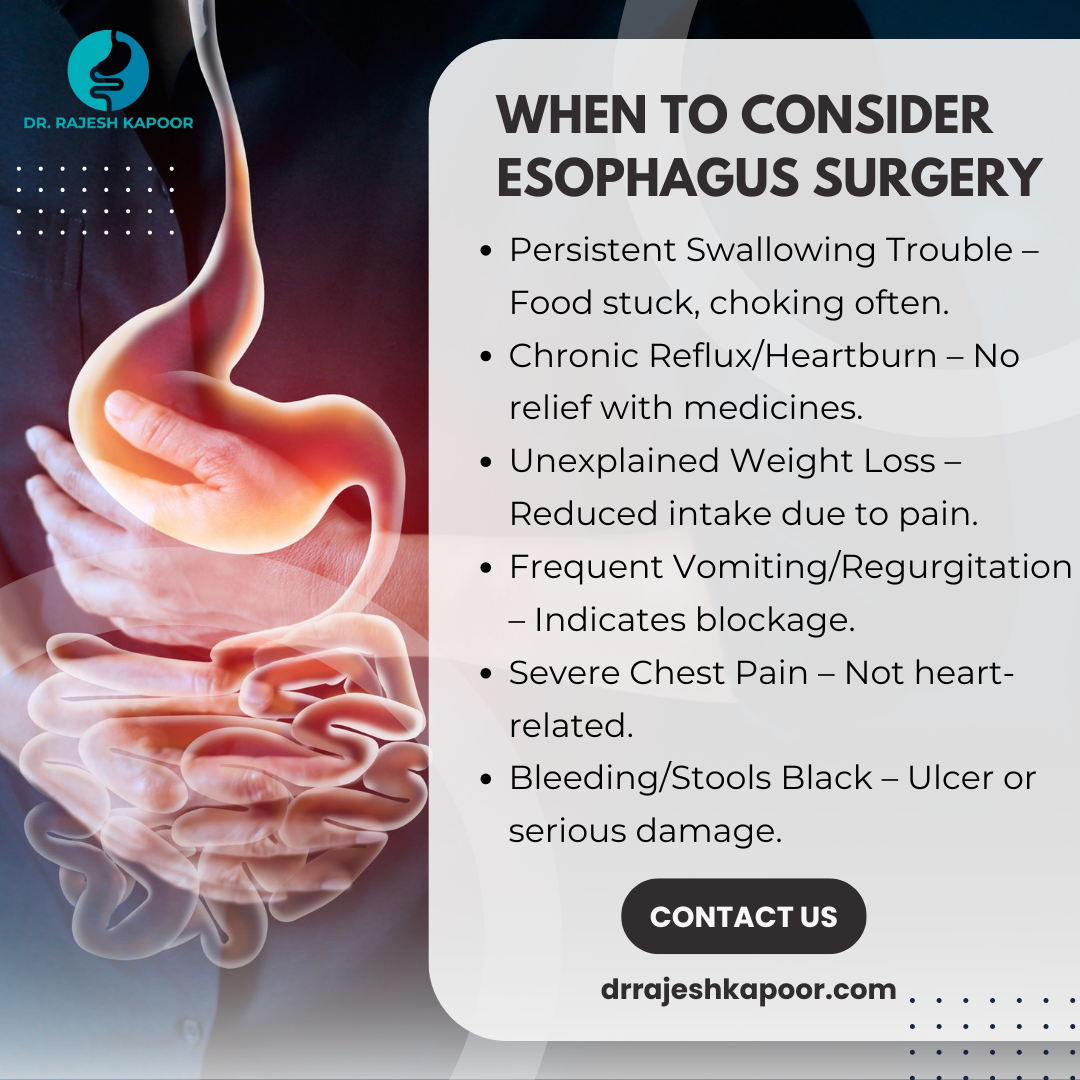
- Persistent Swallowing Problems (Dysphagia)
- If food often feels stuck in your throat or chest, or you experience frequent choking, it may be a sign of a serious esophageal condition.
- Chronic Acid Reflux and Heartburn
- In India, spicy and oily diets often trigger reflux. If medications like proton pump inhibitors (PPIs) do not provide long-term relief, surgery may be an option.
- Unexplained Weight Loss
- Difficulty in swallowing can lead to reduced food intake and sudden weight loss, which is a red flag.
- Frequent Vomiting or Regurgitation
- Constant vomiting or food coming back up after eating could indicate esophageal blockage or motility disorders.
- Severe Chest Pain Not Related to Heart
- If cardiac issues are ruled out and pain persists with swallowing or reflux, surgical evaluation may be necessary.
- Bleeding or Black-Colored Stools
- Long-term reflux can cause ulcers and bleeding. This should never be ignored.
Common Esophagus Surgeries in India
- Esophagectomy – Removal of cancerous or severely damaged parts of the esophagus.
- Fundoplication – Wrapping the top of the stomach around the esophagus to reduce reflux.
- Heller Myotomy – Cutting the muscles at the lower end of the esophagus to ease swallowing.
- Hiatal Hernia Repair – Strengthening the diaphragm opening to prevent reflux.
Preparing for Surgery
- Medical Evaluation – Endoscopy, CT scans, or barium swallow tests help diagnose severity.
- Lifestyle Adjustments – Stop smoking and reduce alcohol intake, both of which worsen esophageal issues.
- Nutritional Counseling – Indian diets rich in spices may need modification before and after surgery.
Recovery After Esophagus Surgery
Recovery varies depending on the procedure. In India, most patients stay in the hospital for 5–10 days after major esophageal surgery. A soft or liquid diet is often recommended initially. Gradual recovery includes:
- Regular follow-ups with the surgeon.
- Eating smaller, more frequent meals.
- Avoiding tobacco, alcohol, and spicy/oily foods.
- Practicing breathing exercises for better lung recovery (especially after esophagectomy).
Why Early Diagnosis Matters
Delaying consultation can make conditions worse. For example, untreated acid reflux can lead to Barrett’s esophagus—a precancerous condition. Similarly, untreated achalasia can permanently damage the esophagus. Early diagnosis ensures better outcomes and simpler surgical interventions.
Indian Context: Why Awareness is Low
In India, many people ignore reflux or swallowing difficulties, assuming they are minor issues linked to diet or stress. Self-medication with antacids is common. However, awareness about the need for timely surgical evaluation remains low. Increasing education on these symptoms can save lives and prevent complications.
Conclusion
Esophagus surgery is not the first line of treatment, but when medications and lifestyle changes fail—or when serious conditions like cancer, achalasia, or severe GERD arise—it can be life-saving. If you experience persistent swallowing problems, unexplained weight loss, or chronic reflux unresponsive to medicines, consult a gastroenterologist or surgeon immediately.
Your health is too important to ignore.