- Satyam Kapoor
- 0 Comments
🧪 Liver Function Tests (LFTs) Explained: What Your Results Mean
Your liver speaks through numbers—here’s how to understand them 🧠💛
🧐 Why Are LFTs Important?
Your liver plays 500+ vital roles—from detoxifying blood to helping with digestion.
But liver damage is often silent—you won’t know until it’s serious.
That’s why LFTs (Liver Function Tests) are critical for early diagnosis and monitoring.
They’re simple blood tests—but they reveal a LOT.
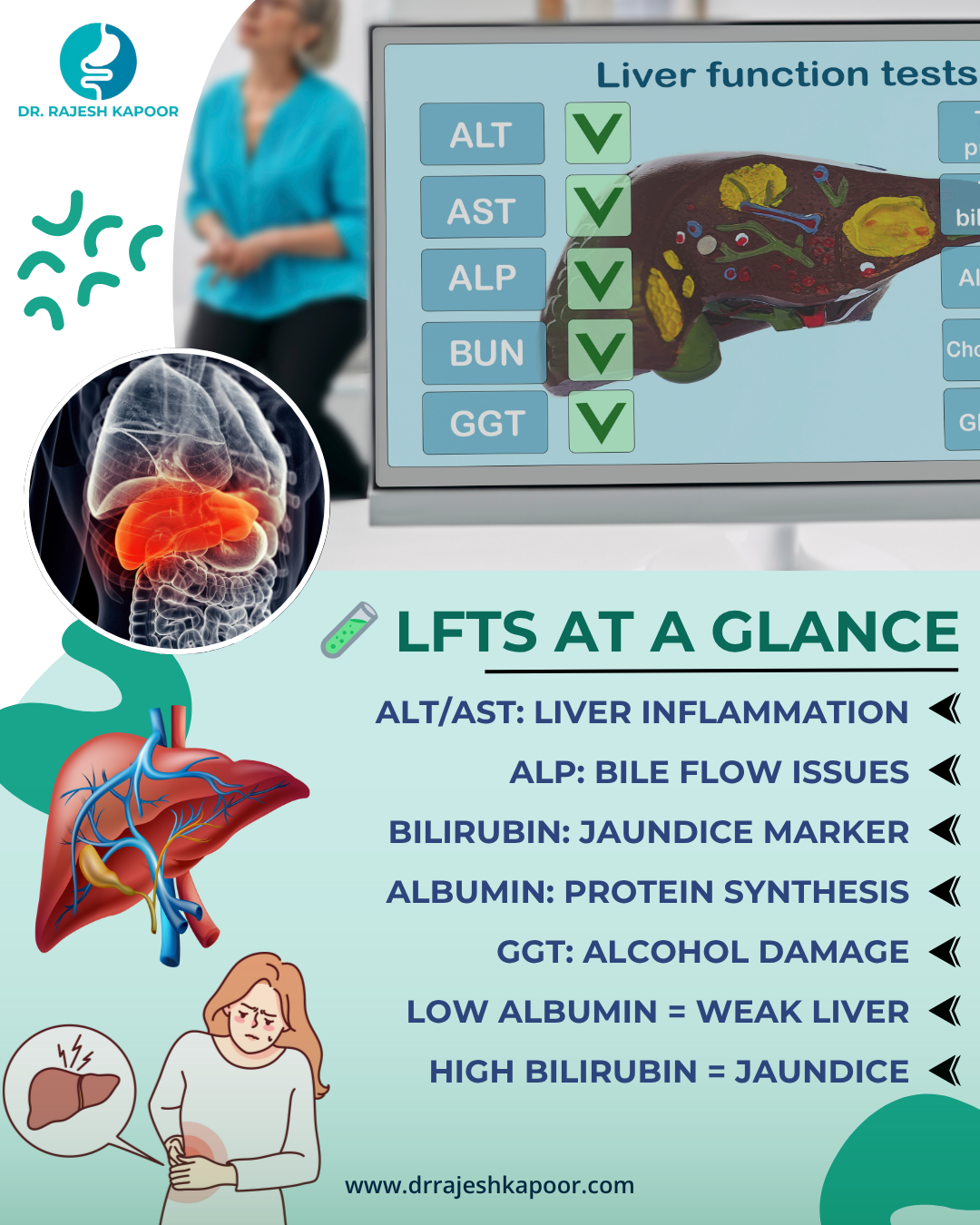
🧬 What Does an LFT Panel Include?
An LFT typically checks the following markers:
1️⃣ ALT (Alanine Aminotransferase)
- Elevated? Could indicate liver inflammation, hepatitis, or fatty liver.
- Normal Range: 7–56 U/L
2️⃣ AST (Aspartate Aminotransferase)
- Found in liver, heart, and muscles—if high with ALT, suggests liver damage.
- Normal Range: 10–40 U/L
3️⃣ ALP (Alkaline Phosphatase)
- Elevated levels may point to bile duct issues or bone problems.
- Normal Range: 40–129 U/L
4️⃣ Bilirubin (Total, Direct & Indirect)
- High bilirubin = jaundice risk. Can indicate liver or bile duct problems.
- Normal Total: 0.1–1.2 mg/dL
5️⃣ Albumin
- Protein made by liver. Low levels can indicate poor liver function or malnutrition.
- Normal Range: 3.5–5.0 g/dL
6️⃣ Total Protein
- Includes albumin + other proteins. Helps assess liver’s synthetic function.
- Normal Range: 6.3–7.9 g/dL
7️⃣ GGT (Gamma-Glutamyl Transferase)
- Sensitive marker for alcohol-related liver damage.
- Normal Range: 8–61 U/L (varies)
⚠️ What Abnormal LFTs Might Indicate
🔹 Fatty Liver Disease (NAFLD/NASH)
🔹 Alcoholic liver disease
🔹 Hepatitis A, B, C
🔹 Liver Cirrhosis
🔹 Gallstones or bile duct obstruction
🔹 Drug-induced liver injury (including painkillers or antibiotics)
🔹 Autoimmune liver disorders
📉 Common Symptoms That Call for an LFT
- Fatigue or weakness 😴
- Yellowing of skin/eyes (jaundice) 💛
- Abdominal swelling or pain 🤕
- Dark urine or pale stool 🚽
- Itchy skin 🪶
- Sudden weight loss 🧍♂️⬇️
If you have any of these—don’t delay the test.
👨⚕️ What Should You Do with Abnormal Results?
- Don’t panic. LFTs fluctuate based on food, meds, even workouts.
- Consult a gastroenterologist or hepatologist for interpretation.
- Follow up with ultrasound, FibroScan, or biopsy if advised.
- Lifestyle changes can often normalize mild elevations!
🥗 Lifestyle Tips for a Healthier Liver
✅ Eat more fruits, veggies, fiber
❌ Avoid alcohol and unnecessary meds
🏃♂️ Exercise regularly
💧 Stay hydrated
🧂 Limit salt and sugar
💊 Take only prescribed supplements or ayurvedic meds—liver injuries are rising due to self-treatment
🔍 When Should You Get LFTs?
- If you’re on long-term meds
- If you drink alcohol regularly
- If you have diabetes, obesity, or thyroid issues
- If there’s a family history of liver disease
- During annual health checkups
📆 Prevention > Treatment