- Dr. Kapoor
- 0 Comments
What Happens During a Colonoscopy? A Step-by-Step Guide 🌟
Colonoscopy – just hearing the word can make many people feel nervous. But it doesn’t have to! A colonoscopy is a common, safe, and vital procedure used to detect colon cancer and other digestive issues. Let’s walk through the process step-by-step, so you know exactly what to expect! 😊
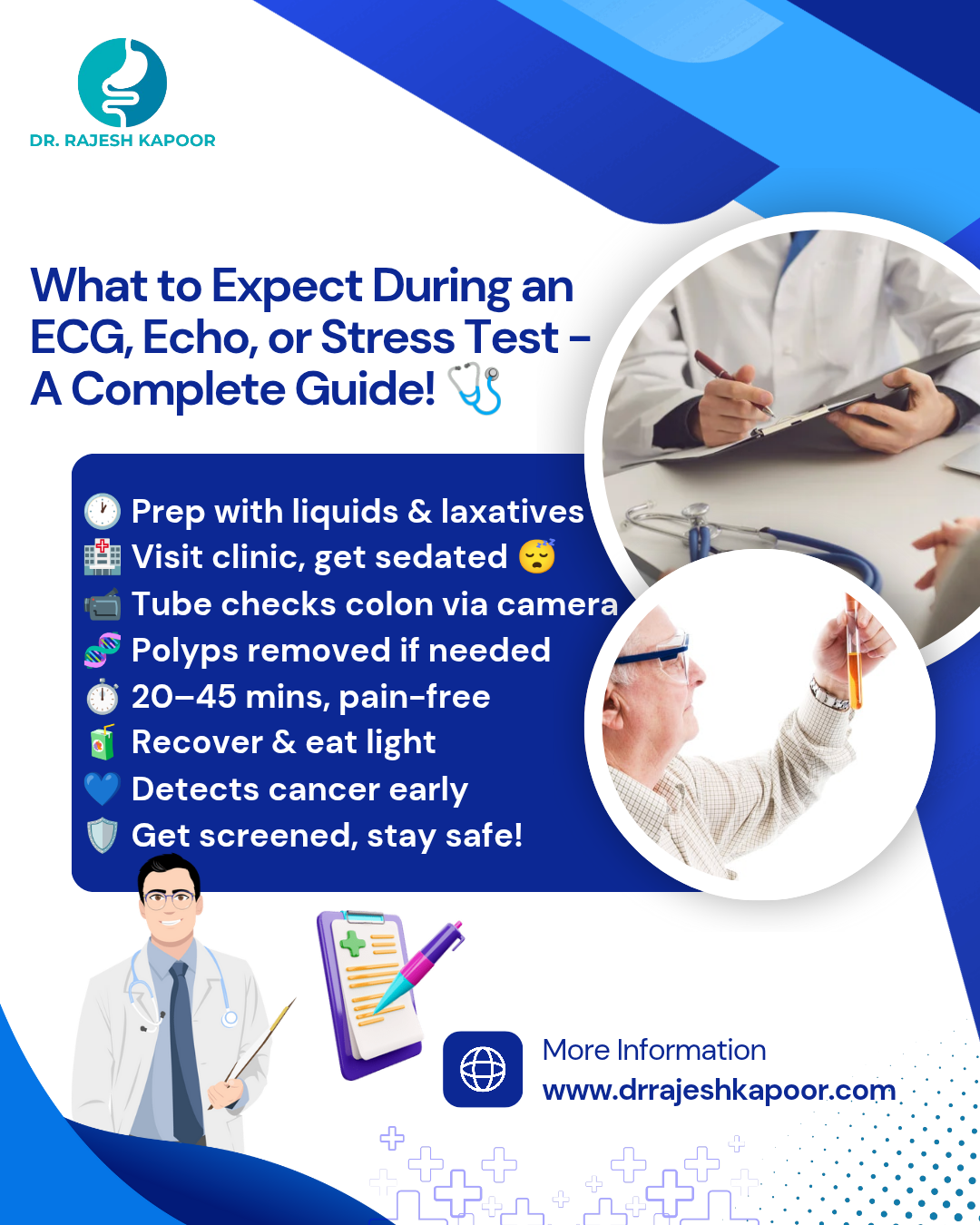
✅ Step 1: Before the Procedure – Prep Time 🍵🚽
Before your colonoscopy, your doctor will give you instructions to empty your colon. This usually involves:
- Clear liquid diet a day before (soups, juices, water, tea).
- Laxatives or a special solution to cleanse your colon. Expect frequent bathroom trips! 🧻💨
- Avoid certain medications as directed by your doctor.
👉 Tip: Stay near a bathroom and keep yourself hydrated!
🏥 Step 2: Arrival at the Clinic or Hospital 🕙
On the day of the procedure:
- Arrive on an empty stomach.
- Wear comfortable clothing.
- A nurse will check your vitals (BP, pulse, etc.) 💓
- You’ll be given a hospital gown and asked to lie down.
Don’t worry — you’ll be in safe hands!
😴 Step 3: Sedation – You Won’t Feel a Thing! 💉
To keep you relaxed and pain-free, you’ll receive:
- Sedation through an IV (intravenous).
- Most people feel drowsy and fall asleep.
- You won’t remember much of the procedure.
Think of it as a mini nap with health benefits! 🛌💤
🌀 Step 4: The Colonoscopy Procedure Begins 📹🧠
Here’s what happens:
- A thin, flexible tube (colonoscope) is gently inserted through the rectum.
- The camera sends live images to a screen to check the colon lining.
- Air or CO₂ is pumped in to expand the colon for better viewing.
- The doctor may remove polyps or take tissue samples (painless!).
The whole thing usually takes 20-45 minutes.
🧘 Step 5: After the Procedure – Recovery 🧃💤
- You’ll rest in the recovery area for 30–60 minutes.
- You might feel gassy or bloated – totally normal!
- Once awake, you can have light food and go home (with someone to drive you).
- Results are either immediate or shared later after lab tests.
❤️ Why It’s So Important 💡
A colonoscopy can:
- Detect early signs of colon cancer 🎯
- Remove pre-cancerous polyps 🧬
- Diagnose conditions like IBD or ulcers 🔬
Doing it every 10 years after age 45 (or as advised) could save your life!
🌟 Final Thoughts
A colonoscopy may sound scary, but it’s quick, painless, and potentially life-saving. Don’t let fear hold you back — knowledge is power, and your gut will thank you! 💪💙